Exdigit Projects
Third-party funded projects bring ideas into practice.
Through external funding, they enable innovative research, interdisciplinary collaboration, and the transfer of scientific knowledge to society and industry. In national and international partnerships, third-party funded projects create opportunities for academic excellence, early-career researcher development, and sustainable innovation.
Putting cultural knowledge into context
a pilot project for the semantic linking of information at the Salzburg Open-Air Museum
Project
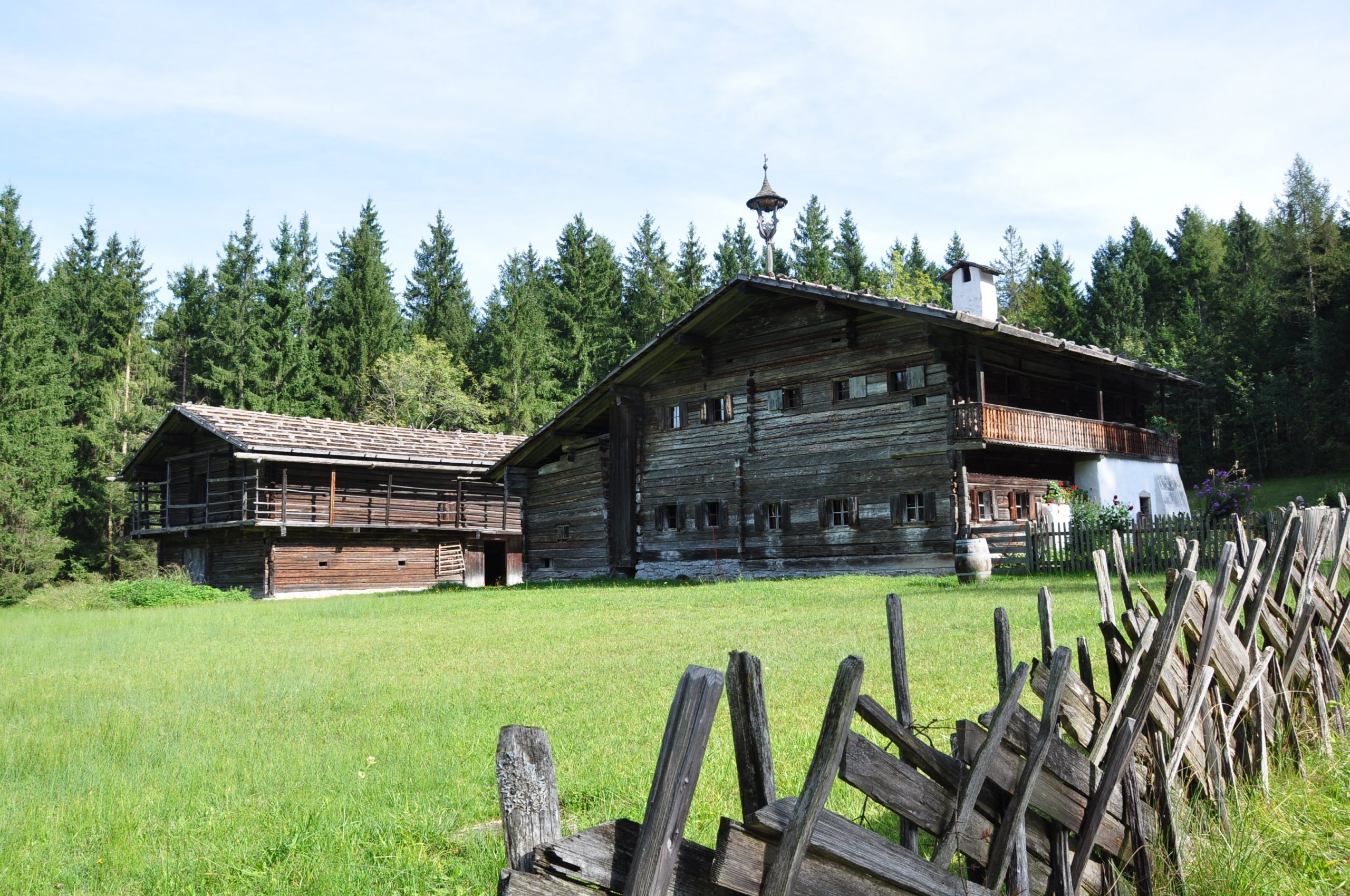
Like many other open-air museums, the Salzburger Freilichtmuseum collects places. Not only buildings from the surrounding countryside have been moved to the museum grounds, but also a wealth of additional information about these places has been gathered. Although relevant knowledge is available, for example through research carried out at the museum, traditional forms of communication do not allow visitors to fully experience the richness of these places.
As part of the project, Eugen Unterberger and his colleagues are researching new forms of digital communication that combine multi- and intermedial elements into multimodal narratives. Using a special prototype, an investigation is being conducted into how these different forms of communication can be interwoven to create an interactive experience of the site—one that conveys both cultural and personal meaning.
- Funding: Land Salzburg
- Duration: 10/2025 – 04/2027
- Budget: 97.136 Euro
- Project partner: University of Salzburg (Lead) | Salzburger Freilichtmuseum
- Project investigator:
- Eugen Unterberger
- Franz-Benjamin Mocnik (Co-Project investigator)
- Project members:
- Michael Span (Salzburger Freilichtmuseum)
- Peter Fritz (Salzburger Freilichtmuseum)
Pawn wars digital
Project
In 1525/26, peasants and craftsmen revolted against the strict rule of Prince Archbishop Lang. Armed conflicts broke out, castles and towns were besieged, and Cardinal Lang was forced to retreat to Hohensalzburg Fortress. However, the success of the uprisings, now known as the Salzburg Peasants’ Wars, was short-lived, as they were eventually brutally suppressed.
In the project “Bauernkriege digital” (Peasants’ Wars Digital), Eugen Unterberger investigates how such significant events can be communicated in the age of digital information. The focus is on innovative methods of multimodal communication, which are being tested in the joint multimedia exhibition “Der Aufstand” (The Uprising) at Hohenwerfen Castle. In accompanying research, the team is investigating how design, communication strategies, and various media influence the visitor experience.
- Funding: European Union | LEADER-Program
- Duration: 10/2025 – 10/2027
- Budget: 155.658,57 Euro
- Project partner: University of Salzburg (Lead) | Salzburger Burgen und Schlösser GmbH (Marcus Hank | Fortress Hohenwerfen)
- Project investigator:
- Eugen Unterberger


Evaluating Digital Health Interventions with Complex Designs
Project
The digitalisation of healthcare is transforming prevention, diagnosis and therapy, particularly in cardiovascular medicine. Wearables, mobile sensors and health apps enable continuous, patient-centred data collection, offering unprecedented opportunities for personalised care. At the same time, these technologies generate data that are highly complex, irregular, and often incomplete, posing major methodological challenges for traditional statistical approaches.
This project develops new statistical methods specifically tailored to digital health data. The focus is on evaluating digital health interventions in settings where data are high-dimensional, noisy, and heterogeneous across individuals. Particular attention is given to complex study designs, including longitudinal monitoring, N-of-1 trials, and small-sample studies, which are increasingly common in both cardiovascular care and research on rare diseases.
The methodological framework is based on advanced nonparametric statistics. These approaches avoid strong distributional assumptions and are therefore well suited for data characterised by missing values, outliers, irregular measurement times, and strong inter-individual variability. The aim is to enable statistically robust and clinically meaningful conclusions even under challenging data conditions where conventional methods often fail.
A key objective of the project is practical implementation. The developed methods will be translated into user-friendly R software packages, making them accessible not only to statisticians but also to clinical researchers and applied scientists. By bridging methodological innovation and real-world applicability, the project supports evidence-based evaluation of digital health technologies and contributes to more reliable and personalised cardiovascular care.
- Funding: FWF | Elise-Richter-Program
- Duration: 09/2025 – 12/2029
- Budget: 466k Euro
- Project partner: Salzburg Research (employing institution) | University of Salzburg (EXDIGIT | postdoctoral qualification)
- Principal investigator:
- Anna Eleonora Carrozzo
RAPID: Reliable AI for Public Law and Intelligent Decision-making
Project
RAPID investigates the potential of artificial intelligence (AI) in public administration.
Using concrete application examples, the legal framework and technical possibilities for the use of large language models (LLMs) in administration are analyzed. The focus is on the automation of repetitive tasks, e.g., checking the completeness of applications for heating subsidies or housing allowances. In the process, different data protection-friendly LLMs with their respective strengths and weaknesses are researched and evaluated in an interdisciplinary manner.
On the part of the DAS faculty, extensive experimental and prototype-based investigations into administration-specific LLM adaptation, which also meets the special legal requirements prevailing in this field, are being carried out.
With its interdisciplinary collaboration between legal and digital sciences, RAPID is also another result of the Exdigit initiative funded by the state of Salzburg.
- Funding: Land Salzburg
- Duration: 01/2026 – 12/2028
- Budget: 590k Euro
- Project partner: Prof. Sebastian Krempelmeier (University of Salzburg, Dep. of Public Law) | Land Salzburg (supporting partner without own funding or duties)
- Project investigator:
- Frank Pallas
- Project members:
- Pia Neuwirth
- Martin Wiesinger
DAWN: Data-driven Analysis and Optimization of Low Voltage Networks
Project
DAWN’s goal is to optimize resource utilization in the energy system through digitalization and the effective use of data. The project aims to create a high-quality data foundation that can be used for more accurate forecasts and targeted resource allocation. To this end, a reliable database will be created through the collection and analysis of measured values, such as smart meter data or additional measurements in the low-voltage grid. This data will contribute to improving grid calculations and forecasts. Furthermore, initial data-driven analysis and forecasting models are being developed, and optimization potential is being identified. The research questions are aimed at both grid operators and energy suppliers, thus creating the basis for an innovation ecosystem in the smart grid.
For grid operators, the research investigates how smart meter data can be used to gain a better understanding of the impact of customer installations on the grid. Key questions include the identification of installation characteristics (e.g., photovoltaic systems, electric vehicle charging points) and their influence on grid behavior. The goal is to improve synthetic load and generation profiles and to analyze customer elasticity. For energy suppliers, the research investigates how representative real-time data can be used to better forecast residual load (as part of the total load of the balancing group) in energy trading. Key questions concern the selection and number of customer installations whose live data should be collected, as well as the seasonal and situational fluctuations in the required data sources.
The PEPSys @ PLUS group researches the application of privacy techniques – esp. anonymization schemes – to the employed data and conducts experiments illuminating the interdependencies between anonymization and data utility, particularly supporting empirically grounded trade-offs.
- Funding: Land Salzburg
- Duration: 01/2025 – 12/2026
- Budget: 460k Euro
- Project partner: Salzburg Research | FH Salzburg | Salzburg AG | Salzburg Netz GmbH | Innsbrucker Kommunalbetriebe | TINETZ-Tiroler Netze GmbH
- Project investigator:
- Frank Pallas
- Project member:
- Jens Leicht
FTZ Cybersecurity
Research and Transfer Center for Data-Driven Evaluation of Security- and Privacy-Technologies
Project
The overall goal of the research and transfer center for Data-Driven Evaluation of Security- and Privacy-Technologies is to establish and implement broad, non-discriminatory, and openly accessible knowledge on cybersecurity and privacy. Its activities particularly include technology transfer for the public, policymakers, regional companies, and students of partner organizations across the Salzburg region. The independent, cooperative research and transfer center will synergistically integrate existing research groups and activities in the involved institutions, following the idea of smart specialization. Last but not least, the center will contribute to profile development, specialization, and visibility of the research institutions in this domain and promote long-term and sustainable personnel development in the R&D sector.
The PEPSys @ PLUS group will particularly engage in the transfer of privacy approaches and technologies towards practical application in real-world enterprise-grade systems and in establishing solid techno-legal assessment models.
- Funding: EU EFRE | Austria Wirtschaftsservice | Land Salzburg
- Duration: 01/2026 – 12/2028
- Budget: ca. 3,0M Euro
- Project partner: FH Salzburg
- Project investigator:
- Frank Pallas
ERDERA – European Rare Diseases Research Alliance
Project
Around 7.000 rare diseases affect over 300 million people worldwide. Fewer than 5% of these conditions (rare and ultra-rare) have an approved therapy. The average time to diagnosis for known diseases is 4 years; yet half of patients never obtain a definitive molecular diagnosis.
With an estimated overall budget of 380 million euros until 2031, ERDERA aims to have a major impact on rare diseases by supporting patient driven research to develop new treatments and diagnostic pathways and harnessing the potential of health and research data, Artificial Intelligence (AI) and digital technologies. The European Union contributes around 150 million euros to this co-funded partnership via Horizon Europe, while the rest of the funding comes from member states, countries associated to Horizon Europe and in cash and in-kind contributions from public and private partners. Built on the solid foundations laid by the European Joint Programme on Rare Diseases (EJP RD), ERDERA brings the community, the data and the resources together to accelerate prevention, diagnosis and treatment.
The research group of Georg Zimmermann is part of work package (WP) 19 on “Methodological support”: This WP will contribute to the knowledge transfer of (bio)statistical, data scientific, epidemiological, AI, and machine learning expertise. Methods will be evaluated and iteratively refined in close collaboration with the clinical experts within ERDERA and other partners. The emphasis is on clinical trials, epidemiological studies, registries, RWD, and combinations thereof. Transferability of the research output is ensured by liaising with the ERDERA Regulatory Support Group, in order to discuss the possibility to undertake the European Medicines Agency (EMA) Qualification Procedures.
- Funding: EU – Horizon Europe
- Duration: 09/2024 – 08/2031
- Budget: 380 Mio Euro
- Project partner:171 public / private partners | Institut National de la Sante et de la Recherche Medicale (Lead)
- Project investigator:
- Georg Zimmermann
- Project member:
- Wanda Lauth
REALISeD
Comprehensive methodological and operational approach to clinical trials in rare and ultra-rare diseases
Project
Over 300 million people globally, including 30 million in Europe, live with a rare disease. Most of the 7,000 identified rare diseases are ultra-rare and have no approved treatments. Research is crucial, but challenges such as limited patient populations, high symptom variability, difficulties in enrolling participants to clinical trials, lack of standardised methodologies, fragmented regulatory frameworks and inadequate infrastructure slow down progress. RealiseD will overcome these barriers by developing advanced clinical research methodologies and optimising trial operations with the collaboration of key stakeholders.
By bringing together experts from various fields, RealiseD will generate cutting-edge operational and methodological tools and resources through a co-creation process involving clinicians via European Reference Networks (ERNs), methodologists, pharmaceutical industry researchers, representatives from patient organisations, regulatory agencies and HTA bodies. RealiseD will disseminate and integrate its methodological solutions regarding, for example, randomization, adaptive designs, federated learning, and joint analysis, in playbooks to reach the broader rare disease ecosystem. This will boost the EU industry, make Europe more appealing for clinical trials and, ultimately, will promote health equity across EU borders, by ensuring that patients with rare and ultra-rare diseases receive the attention they need. With this goal in mind, RealiseD unites nearly 40 partners from academia, regulatory bodies, clinical research institutes and hospitals, patient organisations, pharmaceutical companies and European Research Infrastructures to establish new gold standards for clinical trials in rare and ultra-rare diseases.
The research group of Georg Zimmermann is part of work package (WP) 5 on “Innovative Data Use and Analysis Strategies”. They will contribute expertise in nonparametric and multivariate statistics as well as analysis methodologies for incomplete data, and participate in developing a framework for patient-reported outcomes. The research group is also Task Lead for implementing the newly developed methods in open-source statistical software.
- Funding: EU – Horizon Europe / Innovative Health Initiative (IHI)
- Duration: 01/2025 – 12/2029
- Budget: 17.197.266,25 Euro
- Project partner: 53 public / private partners | Sigmund Freud Private University / AstraZeneca (Lead)
- Project investigator:
- Georg Zimmermann
AncestryML
Identifying and resolving ancestrality biases in biomedicine with machine learning
Project
Differences between population groups can have significant effects on medical applications, but these effects are hardly understood. This project aims to evaluate the transferability / generalizability of biomedical associations across population groups. For example, if an AI algorithm for detecting genotype-phenotype relationships is trained on a population that is predominantly European, do the results generalize to an African population as well? And, if this is not the case, how can the generalizability be improved, while at the same time avoiding additional financial burden and ethical issues related to merging data from different labs? The same questions may arise in situations with highly unbalanced gender distributions, or a strong predominance of a particular disease subtype.
In order to find some answers and identify directions for future research, in line with the WISS2025 “Impulsprojekt” funding programme, new AI methods will be developed and systematically compared with existing approaches, using different large-scale biomedical datasets. Meta-analysis and federated data analysis techniques will be assessed with respect to their capacity of improving limited generalizability across multiple datasets. The research will be conducted in collaboration with the group of Nikolaus Fortelny (project lead) at the University of Salzburg.
The results will be discussed with potential regional partners at the interface of medical and basic methodological research as well as pharmaceutical companies to explore in which areas differences between population groups may influence drugs and interventions. The outcomes of these stakeholder interactions are expected to materialize in joint follow-up projects and funding proposals.
The research group “Data & Life Sciences” of Georg Zimmermann contributes to the project goals by conducting a thorough examination of the mathematical background of LIMMA, a frequently used open-source software pipeline. Moreover, they will carry out the assessment of data synthesis approaches.
- Funding: WISS2025 | Impulsprojekt
- Duration: 01/2025 – 06/2026
- Budget: 99.556 Euro
- Project partner: University of Salzburg | Nikolaus Fortelny (Project investigator)
- Project investigator:
- Georg Zimmermann
- Project member:
- Gentonis Halili
HELICOPTER
Hierarchy of the Influence of Laboratory Chemical Markers and Their Interaction with Comorbidities on Outcome and Personalized Therapy of Trauma Patients During Initial Treatment and Rehabilitation
Project
Demographic change in Germany is leading to a growing proportion of older patients in trauma surgery, many of whom present with age-related comorbidities. These comorbidities are known to be associated with complicated healing processes, including delayed fracture and wound healing, prolonged hospitalization, reduced mobility, increased mortality, and delayed return to work. Given that many older individuals remain employed, this development is of particular relevance for occupational accident insurance systems and specialized trauma care providers such as the Occupational Accident Insurance Hospitals (BG Clinics) in Germany.
Despite structured and longitudinal care pathways within the occupational accident insurance treatment framework, the influence of comorbidities on individualized trauma-surgical treatment planning remains insufficiently considered. Preliminary data suggest that specific comorbidity profiles are associated with characteristic alterations in blood biomarkers following trauma, which may contribute to complication-prone healing trajectories.
HELICOPTER is the largest project that has ever been supported by the German Statutory Accident Insurance (DGUV) research funds. Its key aim is to identify risk profiles in trauma patients with fractures of long bones by combining systematic screening of comorbidities, clinical data, and laboratory biomarkers. Patients will be examined longitudinally from acute inpatient treatment through inpatient and outpatient rehabilitation. Advanced statistical analyses and machine learning methods will be applied by Georg Zimmermann’s group in collaboration with the IDA Lab Salzburg to evaluate large clinical and laboratory datasets, identify outcome-relevant predictors, and define risk clusters. These findings will be validated in an independent patient cohort, following established biostatistical principles for multivariable clinical prediction model validation. The long-term goal is to enable early risk stratification and support more personalized, complication-aware trauma care.
- Funding: German Statutory Accident Insurance (DGUV)
- Duration: 01/2025 – 12/2026
- Budget: 151.261 Euro
- Project partner: University of Salzburg | IDA Lab Salzburg
- Project investigator:
- Georg Zimmermann
- Project member:
- Wanda Lauth
- Philipp Mangold
CAMO – Covariate adjustment for multivariate outcomes
Project
In healthcare, the approval of new treatments is based on systematically collected data regarding the effectiveness and safety of medical interventions (e.g., drugs). Typically, a single measurement is defined in a clinical study as the “primary endpoint”—the measurement that is of primary importance in assessing effectiveness (e.g., weight loss within a specific period during a nutrition-related treatment). However, often multiple measurements are of interest in order to capture the full range of (positive) effects of an intervention simultaneously (e.g., quality of life, pain, etc.). Suitable methods for such statistical analyses already exist – however, they have the disadvantage that they cannot account for imbalanced distributions of certain characteristics (e.g., age, gender, disease features) between groups of patients in a clinical study.
The project “CAMO – Covariate adjustment for multivariate outcomes” (https://www.fwf.ac.at/forschungsradar/10.55776/PIN9834224) has the aim of tackling this challenge by developing novel methods for data analysis. Together with the universities of Hasselt and Leuven, the “Data & Life Sciences” research group will work on probabilistic index models and nonparametric rank-based methods, including in particular also generalized pairwise comparisons and extensions thereof, in order to allow for covariate adjustment. Corresponding to the multi-faceted characteristics of the endpoints, primarily multivariate analysis methods will be considered. Georg Zimmermann’s team is taking the lead in developing methods for handling incomplete data and creating impact in the scientific community by implementing the newly developed algorithms in statistical software.
- Funding: FWF | Weave
- Duration: 09/2025 – 09/2028
- Budget: 171.418 Euro
- Project partner: University of Salzburg (Lead) | University of Hasselt | University of Leuven
- Project investigator:
- Georg Zimmermann
- Project member:
- Loise Kanini
Spatial differentiation of flood vulnerability
Project
The concept of flood risk is closely related to floods and floodplains and is the product of hazard, exposure, and vulnerability. Although the knowledge of flood hazards and exposure has improved significantly, vulnerability studies remain the most challenging obstacle in assessing flood risk. The primary goal of this project is to assess the spatial differentiation of flood vulnerability in municipalities in Poland and Austria. The project will investigate the exposure to the threat of the area and its population, as well as the social sensitivity and ability of communes and their populations to respond to and cope with natural hazards. The project sets four research hypotheses: (1) understanding the correlation between the magnitude of exposure, sensitivity, and resilience of municipalities to floods makes it possible to adjust municipalities` flood risk management strategies and reduce their vulnerability to flooding; (2) the public`s awareness of flood hazards and sociodemographic characteristics strongly affect a commune`s level of vulnerability to disasters; (3) the municipalities most vulnerable to natural hazards include those with insufficient funding to protect the public from flooding, establish relevant educational measures, or provide effective flood risk communication; and (4) greater public awareness of flood hazards and better knowledge of how to act during disastrous events increase the effectiveness of flood management strategies, both in terms of evacuating the population and minimising vulnerability levels. The motivation for this research is to gain better knowledge of the vulnerability of communes to flooding in Poland and Austria, the level of preparedness of their populations and infrastructure to this threat, and their ability to return to pre-flood operational conditions. The rationale for such considerations stems from the increasing drivers of natural hazards globally in recent decades combined with shifts in the approach to flood risk management. The project`s innovation lies primarily in its research procedure, which analyses the relationship between the individual elements of flood vulnerability in communes (exposure, sensitivity, and resilience). The project is a multifaceted approach incorporating physical, social, environmental, and institutional characteristics, that have not yet been applied on such a scale in Poland and Austria. The implementation of this project will contribute to methodological advancements in international research on this topic. The findings of this project will be translated into recommendations for policymakers responsible for flood risk management (particularly flood vulnerability) and transport infrastructure development.
- Funding: FWF | WAEVE Program
- Duration: 01/2025 – 12/2027
- Budget: 269.800,47 Euro
- Project partner: University of Salzburg, Dep. Artificial Intelligence and Human Interfaces and Dep. Geoinformatics | Cooperation with the University of Lodz, Poland (Lead)
- Project investigator:
- Zahra Dabiri